Zoo Home
Axolotl Home
Anatomy
Diet Info
Images
Contact
Interesting Facts
Interesting facts about your favourite animal!
- The Axolotl is a neotenic salamander and is considered to be one of the world’s most unusual and unique species of salamanders.
- The ‘Mexican Walking Fish’ as it is commonly referred to, isn’t actually a fish – it’s an amphibian. Axolotl can be found in Mexico in freshwater lakes and ponds.
- Axolotl have an astonishing ability to regenerate body organs and lost limbs.
Incredibly, an Axolotl can grow back lost limbs in only a few weeks. It can even regenerate its lungs, heart, spinal cord and parts of its brain, if it suffers a head injury and heals without any scarring.
- Axolotl can regrow the same limb up to 5 times. Then it stops.
There appears to be a limit of how many times the Axolotl is capable of regrowing a limb. Scientists discovered that by the fifth time, few limbs could regrow to their previous potential and instead, scar tissue started to form.
- The feathery looking branches that extend from either side of its head are its gills.
Axolotl retain their gills, but also have lungs that are fully functional. They will often rise to the surface for a gulp of air.
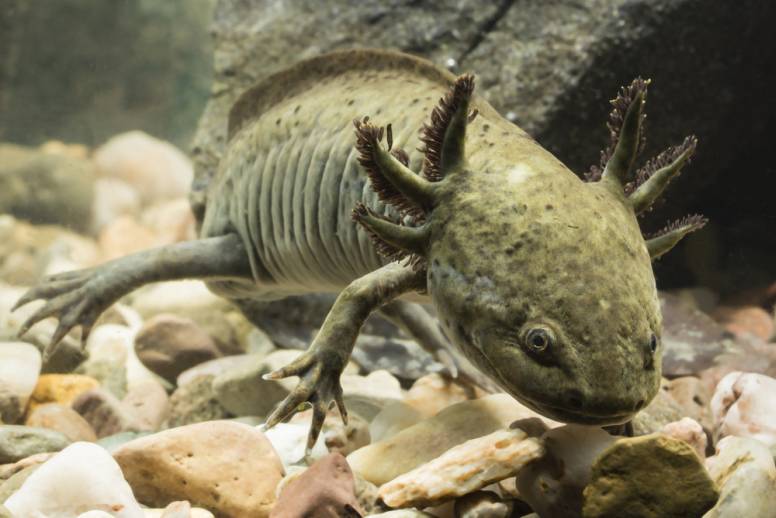
- This Axolotl does not chew its food, it feeds by using suction.
It does this by using rakers that interlock and close the gill slits as food is sucked into the mouth. They are carnivorous, and eat worms, tadpoles, insects and even small fish.
- Although critically endangered, the Axolotl has very few predators.
In the wild, the Axolotl is pretty much on its own, although it does have a couple of other aquatic competitors that consider the Mexican Walking Fish as part of their food chain. The Carp and Tilapia happen to enjoy the taste of Axolotl.
- The Axolotl anatomy has a very unique characteristic, known as neoteny.
This is the term used to describe animals that keep their juvenile characteristics until adulthood without undergoing many phases of change.
- The word Axolotl comes from the Ancient Aztecs who revered them, and translates to mean ‘water dog’.
The Axolotl has a mythological connection to Xolotl, which was a dog-headed Aztec God in mythology. Xolotl was the god of fire, lightning, deformities and death. According to myth, the Aztec gods needed to sacrifice themselves to the sun, to keep it alive and moving across the sky. However, Xolotl was fearful of being sacrificed and transformed into a maguery plant, and then an Axolotl to hide.
- The breeding season for the Axolotl is early in the calendar year.
As this fish reached sexual maturity by the time it reached 6 months of age, the breeding season typically runs from March to June. Spawning takes place in the late winter which is when water temperature and levels are more temperate. Breeding typically occurs once a year in the wild however, in captivity two and sometimes three breeding cycles are possible.
- The breeding ritual includes a dance.
The male and female Axolotl begin the breeding process with a waltz. Essentially it is a dance between the two of them that serves as the initiation phase of mating. Both the male and female will rub and slide against the other’s cloaca while dancing in a circular fashion. The male will eventually drop a cone-shaped mass with a sperm cap. He does this following about 30-seconds of vigorous tail shaking. The female will pick up the deposit with her cloaca following a tail shaking display and fertilization begins.